Kaolin clay is one of the easiest natural add-ins for melt and pour soap. It’s a gentle clay that gives the bars a silky feel and a mild exfoliating touch. In this tutorial I turn clear base a creamy white with titanium dioxide, color it with Blue Slushie, add kaolin clay, and pour pretty flower and cloud soaps.
As an Amazon Associate I earn from qualifying purchases. Some links in this post are affiliate links. They cost you nothing extra and help support Koala Soap.
Materials & Tools
- About 3 cups of melted clear melt and pour soap base
- 2 teaspoons kaolin clay
- Titanium dioxide to whiten the base
- Blue mica or colorant (I used Blue Slushie; a Stardust mica set works too)
- Fragrance oil (I used Crisp Cotton from Bramble Berry)
- Handheld milk frother
- Flower 6 cavity mold (holds about 2 1/2 cups of soap)
- Cloud soap mold
- Spray bottle of isopropyl alcohol
- A large pour cup, spatula, small dish and a chopstick for stirring
Fragrance Amount
I use 5 ml of fragrance oil per 16 oz of soap base. You can always use less, but I wouldn’t go over 5 ml per 16 oz.
How to Make Kaolin Clay Melt and Pour Soap: Step by Step
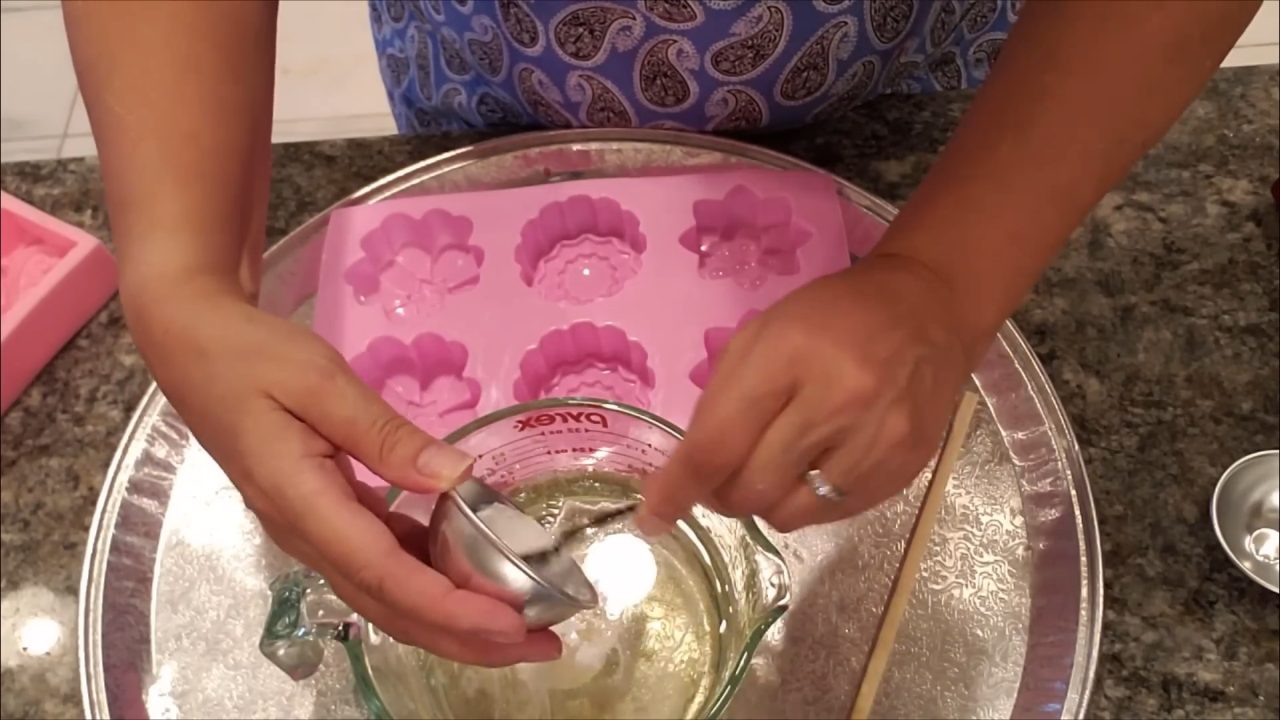
1. Melt the Base and Add Titanium Dioxide
Melt the clear base. Mix titanium dioxide with a little alcohol, add it to the soap (mine was about 139°F), and blend it in with a milk frother. The frother makes it smooth and creamy, and the soap turns white like goat’s milk. Add a bit more if you want it whiter.
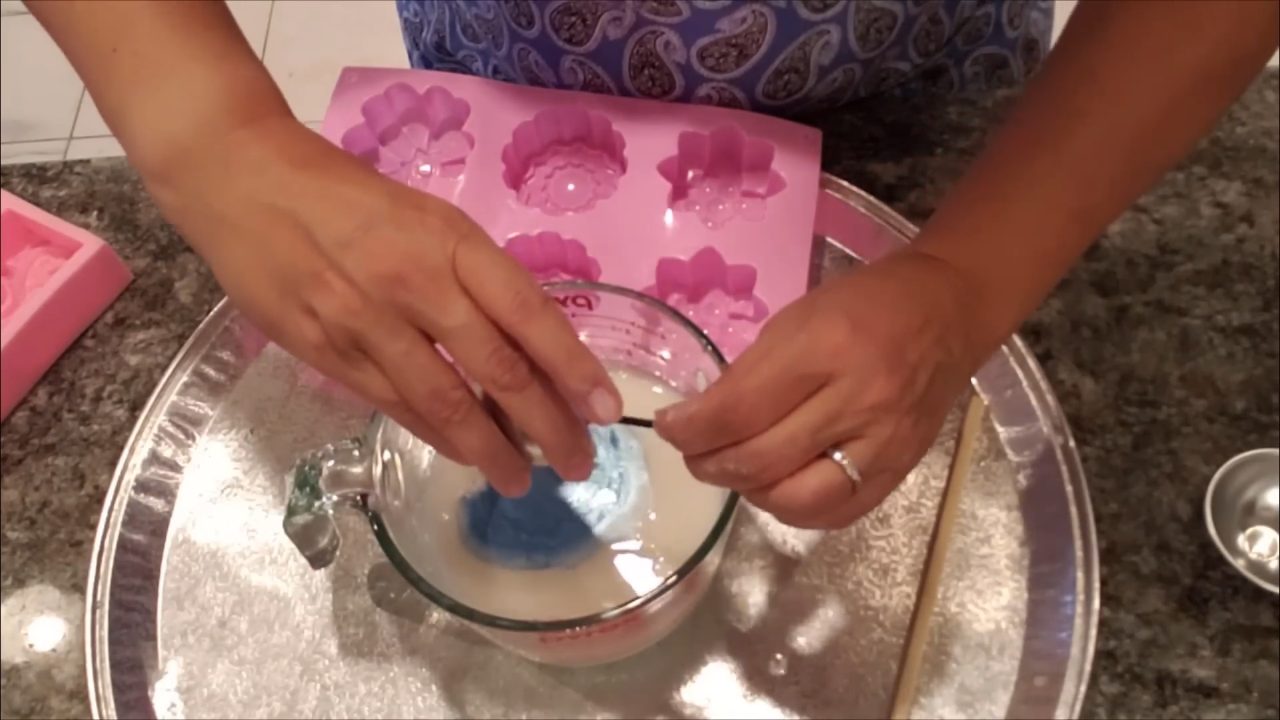
2. Add Fragrance and Color
Stir in your fragrance (up to 5 ml per 16 oz), then add the blue color and mix with a chopstick until you have an even, soft blue.
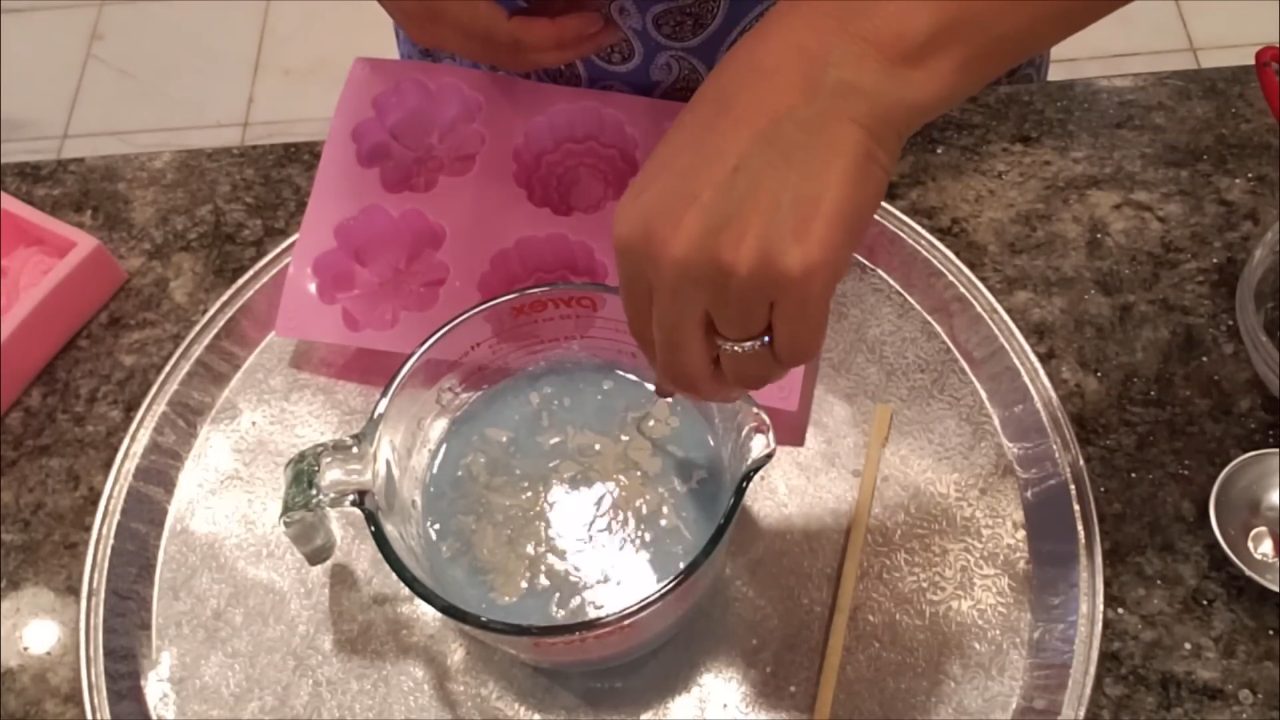
3. Mix In the Kaolin Clay
Recommendations for clay vary a lot. Some sources say 1–2 teaspoons per pound, and others say 1–2 tablespoons per pound. I erred on the side of caution and used 2 teaspoons for about 3 cups of melted soap. Mix the clay with a little alcohol in a small dish first and blend it with the frother so there are no clumps. Then stir it into the soap. Use a deeper dish than I did, because the frother can splash.
4. Pour Into the Molds
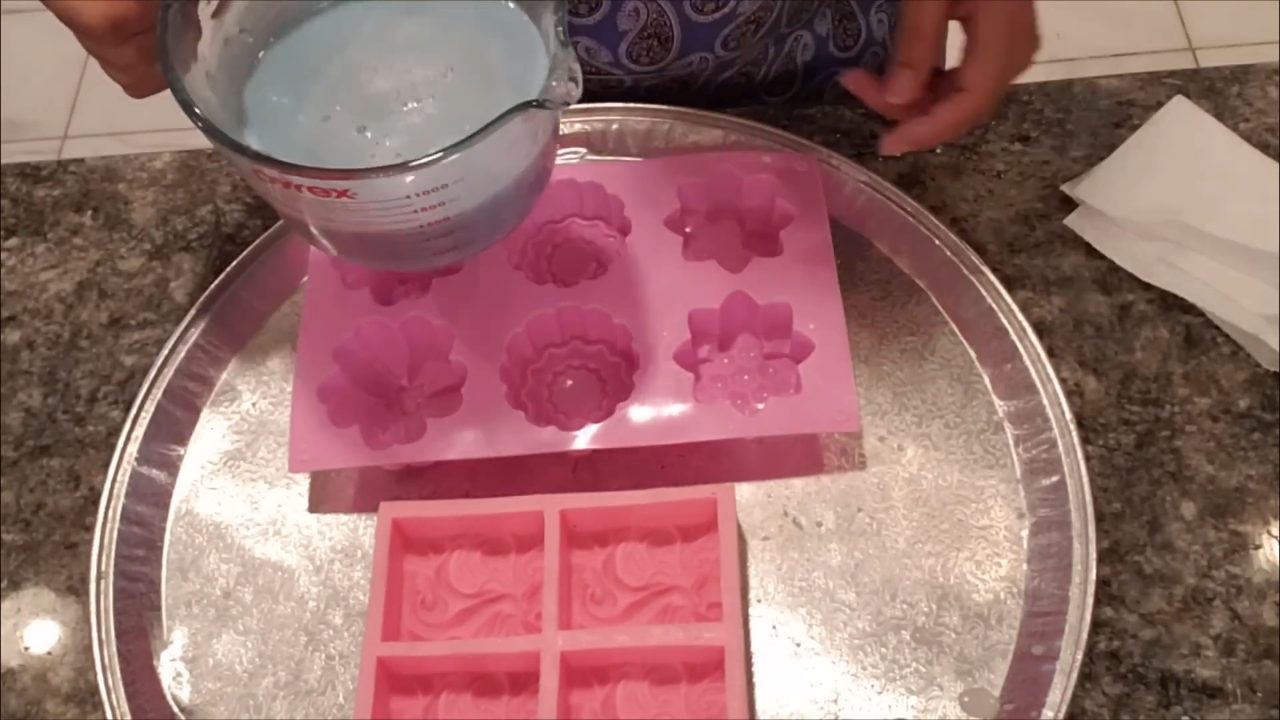
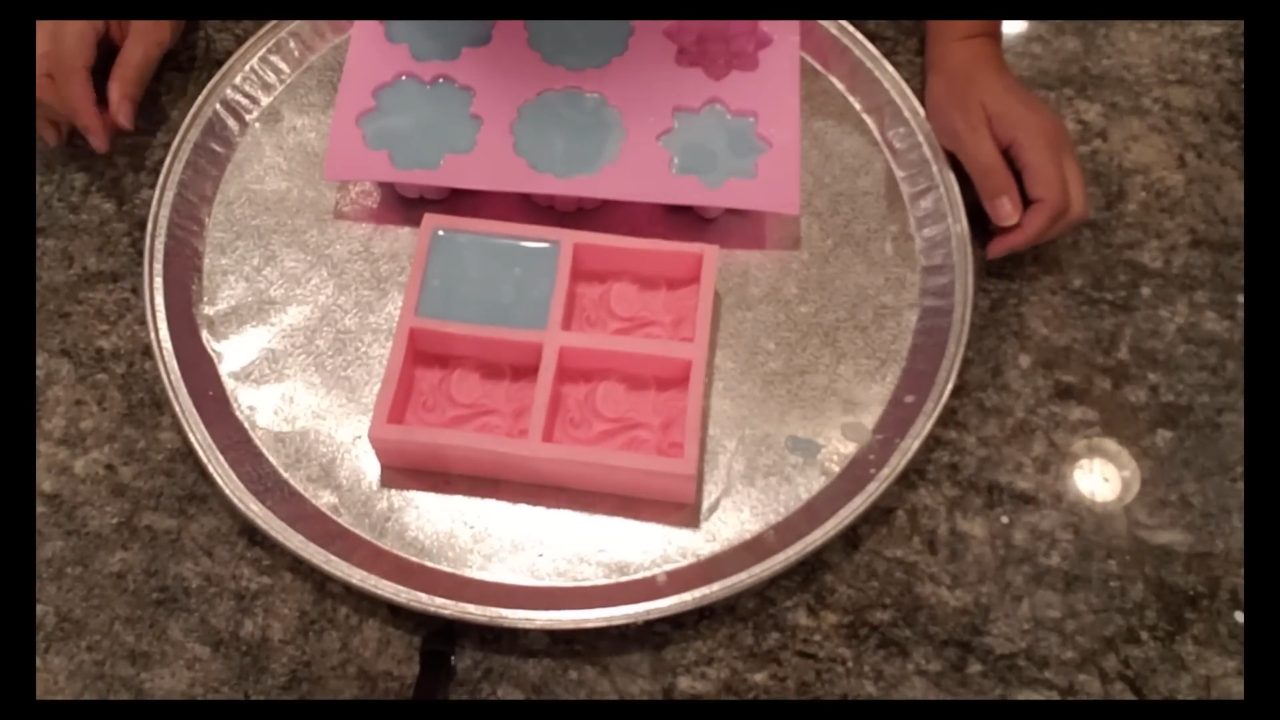
Set flimsy silicone molds on a sturdy tray before you pour. Give the soap a final stir, then pour into the flower mold and the cloud mold. Clay can settle, so stir between pours. The last bit in the cup will have the most clay in it. Spray the tops with alcohol to pop any bubbles.
5. Let Set and Unmold
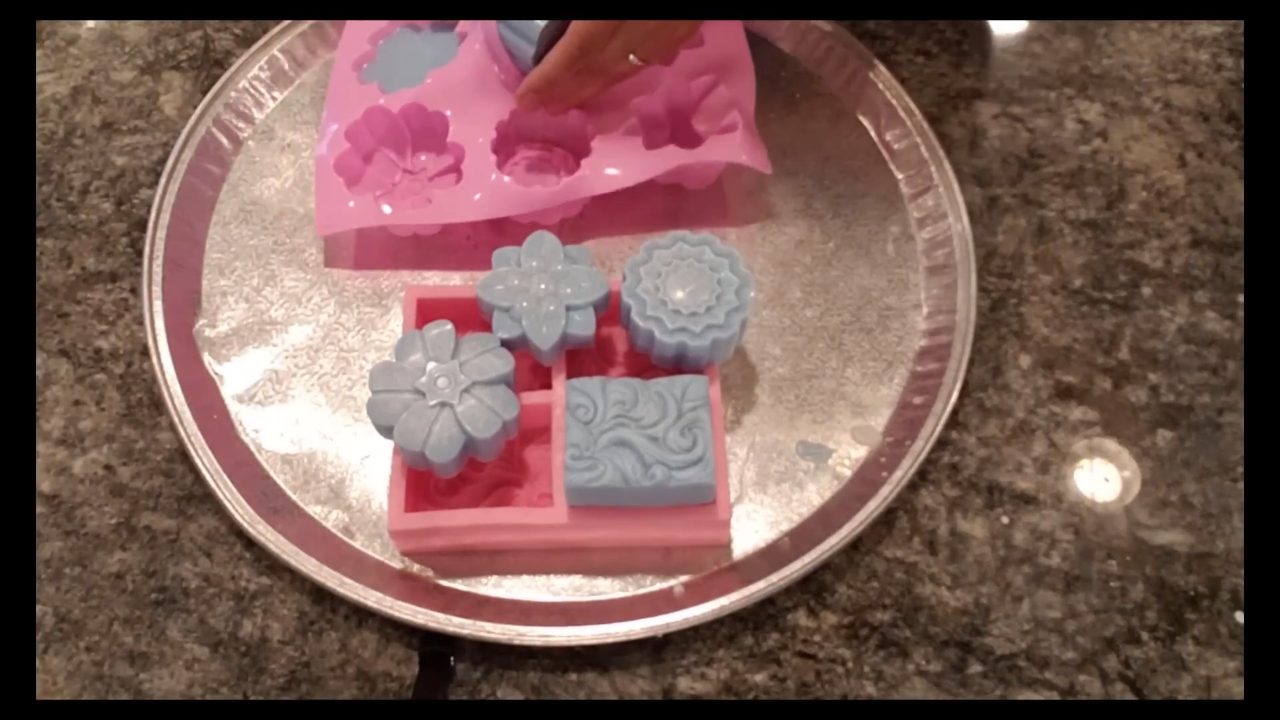
Let the soaps cool and harden completely, then pop them out of the molds.
Tips & What I Learned
- Pre-mix the clay. Blend kaolin clay with alcohol first so it doesn’t clump in your soap.
- Start small. About 2 teaspoons for 3 cups of soap gives a nice feel without being gritty.
- A milk frother is your friend. It blends titanium dioxide and clay smoothly in seconds.
- Stir between pours. Clay settles to the bottom of your cup.
- Support flimsy molds. Set them on a tray before pouring so they don’t bend.
Troubleshooting
The clay settled to the bottom of my soap.
Stir right before each pour, and don’t pour the last bit from the bottom of the cup into a good bar.
My titanium dioxide made white specks.
Mix it with alcohol first and blend it in with a frother.
The soap feels gritty.
You may have used too much clay. Try about 2 teaspoons for 3 cups of melted soap.
FAQ
What does kaolin clay do in soap?
Kaolin is a gentle clay that gives melt and pour soap a smooth, silky feel and a light exfoliating touch.
How much kaolin clay should I add to melt and pour soap?
Recommendations range from 1–2 teaspoons up to 1–2 tablespoons per pound. I used 2 teaspoons for about 3 cups of melted soap.
Do I need titanium dioxide?
No. It’s optional. It turns clear base white so the colors look soft and pastel. You can skip it, or use a white base instead.
How much fragrance should I use?
I use 5 ml per 16 oz of soap base. You can always use less, but I wouldn’t use more than 5 ml per 16 oz.
More Natural Soap Ideas
- Himalayan Salt Melt and Pour Soap
- Coffee Melt and Pour Soap
- Cloud Wave Melt and Pour Soap
- All my melt and pour soap tutorials on YouTube
If you make this, I’d love to see it! Tag me on Instagram or Pinterest, and subscribe on YouTube for new soap tutorials.