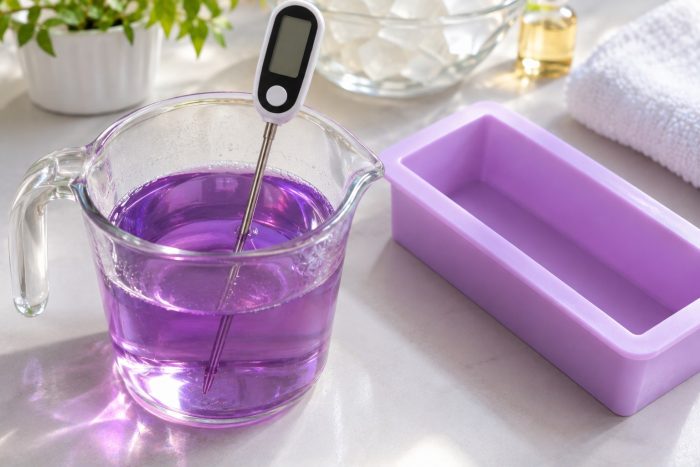
Temperature is the secret behind smooth, clear, bubble-free melt and pour soap. Too hot and the soap scorches, gets rubbery and loses its scent. Too cool and it gets lumpy, cloudy and won’t stick to the layer below. A digital thermometer takes the guesswork out of every batch.
These are general ranges that work for most bases. Always check your base’s label, because clear, goat milk and shea butter bases can melt and set at slightly different temperatures.
As an Amazon Associate I earn from qualifying purchases. Some links in this post are affiliate links. They cost you nothing extra and help support Koala Soap.
Quick Temperature Chart
- Melting: heat until fully liquid, usually somewhere around 120 to 140°F (49 to 60°C).
- Never go above: about 160°F (71°C).
- Adding fragrance: once the base is off the heat and starting to cool, around 125 to 135°F (52 to 57°C).
- Pouring most soaps: about 125 to 135°F (52 to 57°C).
- Pouring over a set layer: about 120 to 125°F (49 to 52°C), after spraying the layer with alcohol.
- Suspending exfoliants or embeds: cool to about 115 to 120°F (46 to 49°C), when the base starts to thicken.
How to Melt Melt and Pour Soap Without Overheating
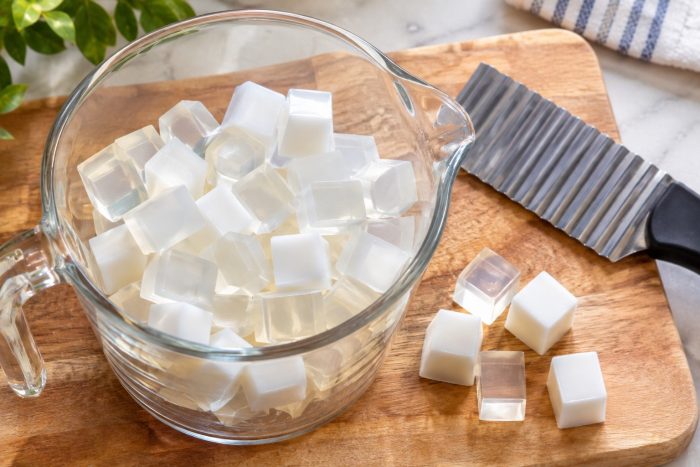
- Cut the base into small, even cubes so it melts evenly.
- Microwave in 20 to 30 second bursts, stirring gently between each one. Large amounts heat unevenly, and the center can boil while the edges are still solid.
- A double boiler gives gentler, steadier heat for big batches.
- Stop heating as soon as the last bits melt. The heat in the soap will finish them.
Signs Your Soap Got Too Hot
- It boils or gets foamy
- It turns rubbery or stringy
- Clear base turns cloudy or yellow
- The scent fades fast
- A thick skin forms quickly on top
We learned this the hard way with our too hot amber blue soap. Overheated soap can still be used, but it may not be as clear or smooth.
Why Fragrance Goes In After Heating
Fragrance and essential oils evaporate when the base is very hot, so your soap ends up with less scent. Some oils can also discolor or speed up thickening. Take the base off the heat, let it cool a little, then stir in scent gently. See what you can add to melt and pour soap for amounts.
Temperature for Layers
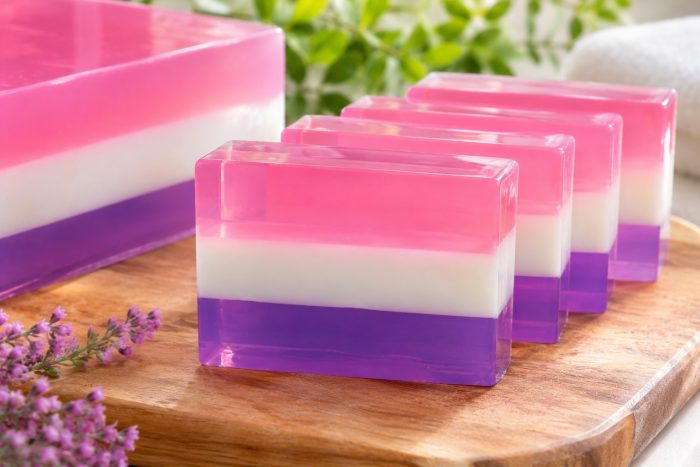
If the second layer is too hot, it melts into the first and the colors blur. If it’s too cool, the layers don’t bond and can separate later. Wait until the first layer is firm on top but still warm, spray it with rubbing alcohol, then pour the next layer at about 120 to 125°F.
Temperature for Swirls
Swirls work best when the colors are poured at about the same temperature and a little on the cool side, so they flow without mixing into mud. Our guide on how to swirl melt and pour soap walks through it.
Temperature for Suspending Additives
Oatmeal, poppy seeds, jojoba beads and small embeds sink in hot, thin base. Stir the base as it cools. When it starts to thicken and coat the spoon, stir in the additives and pour. A suspension base also helps.
Why Does My Melt and Pour Soap Harden So Fast?
Melt and pour starts setting quickly once it cools below about 120°F, especially in small amounts or in a cold room. Work in smaller batches, keep your measuring cups warm, and reheat the base for a few seconds if it starts to thicken before you pour. Don’t let it overheat while reheating.
FAQ
What temperature does melt and pour soap melt at?
Most bases melt somewhere around 120 to 140°F (49 to 60°C). Check your base’s label for exact numbers.
Can I remelt soap that set too fast?
Yes. Melt it gently again. See can you remelt melt and pour soap.
Do I need a thermometer?
You can make soap without one, but a digital or infrared thermometer helps you get clear, smooth soap every time, especially with layers and swirls.
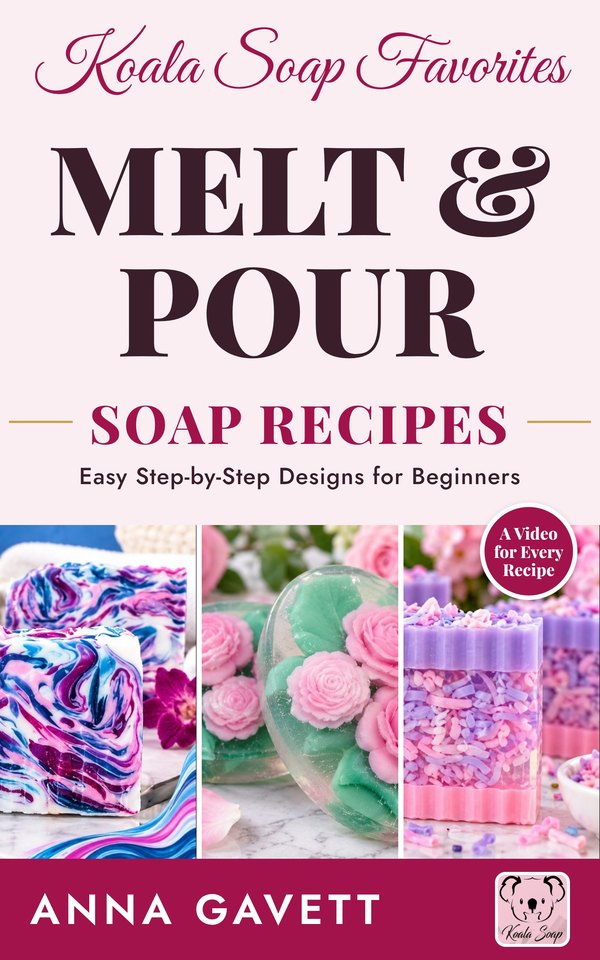
Love making soap? Get my book!
Koala Soap Favorites has 31 of my most-loved melt and pour designs with step-by-step photos, exact amounts and a video for every recipe. It makes a sweet gift for a crafty friend, too.
See it on AmazonLook inside the book →