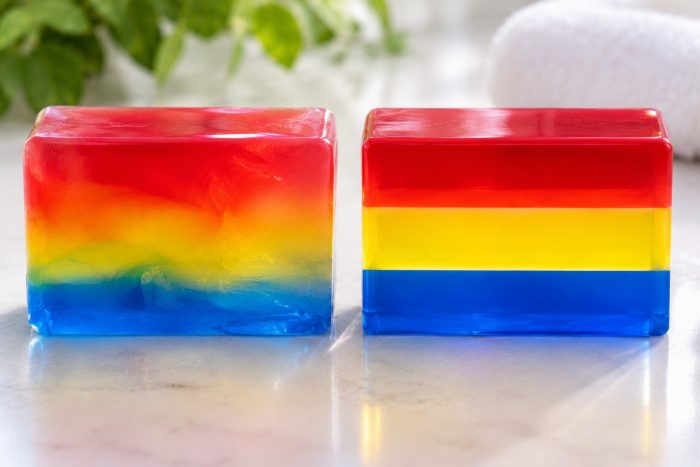
It’s tempting. You have a box of food coloring in the kitchen, and it seems like it should work in soap. Technically, food coloring will tint melt and pour soap. But it causes enough problems that the honest answer is no, you shouldn’t use it. Here’s why, and what to use instead.
As an Amazon Associate I earn from qualifying purchases. Some links in this post are affiliate links. They cost you nothing extra and help support Koala Soap.
Why Food Coloring Doesn’t Work Well in Soap
- It bleeds. Food coloring is water-based, and it moves through soap. Layers, swirls and embeds blur into each other within days or weeks.
- It fades. Many food dyes change color or fade in soap and in light. Your bright red can turn pink, brown or orange.
- It can stain. Some food colors tint the lather, washcloths, towels and even skin, especially in darker shades.
- It isn’t made for soap. It’s tested for eating, not for products that sit on skin and react with soap.
- The color is weak. Getting a deep color takes a lot of liquid, and extra water can make the soap softer and more likely to sweat.
So yes, you can use food coloring for a quick one-time project with kids. For soap you’ll gift, sell or want to look good next month, use colors made for soap.
What to Use Instead of Food Coloring
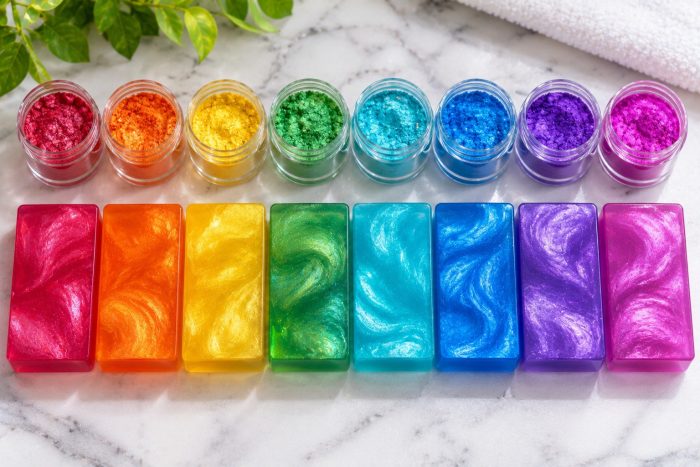
Mica powder
Mica is the most popular soap colorant. It gives rich color with a soft shimmer, it doesn’t bleed, and a little goes a long way. Mix about 1/4 teaspoon with a few drops of rubbing alcohol, then stir it into a pound of melted base. Try mica powder or stardust mica for extra sparkle. You can even paint melt and pour soap with mica.
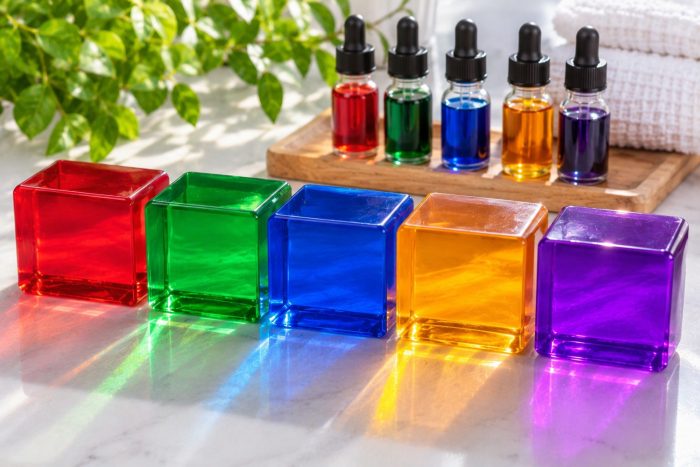
Liquid soap dyes
These look like food coloring but are made for soap and skin. They’re bright, blend easily and work well in clear base. Start with one or two drops at a time. Try these liquid soap dyes.
Titanium dioxide
Use it for opaque white soap or soft pastels. Mix a pinch of titanium dioxide with alcohol before adding.
Natural colorants
Clays and some botanical powders give soft, earthy colors. Kaolin clay brightens soap, and activated charcoal makes gray and black. Natural colors are more muted and can fade over time.
Mica in Water vs. Alcohol
Mixing mica with rubbing alcohol helps it spread evenly with no clumps. We tested both in our tie-dye soap with mica in water vs alcohol.
What About Crayons or Candle Dye?
Skip them too. Crayon wax doesn’t dissolve in soap and leaves waxy specks. Candle dye isn’t made for skin. Stick with colorants sold for soap or cosmetics.
FAQ
Is food coloring safe in soap?
Food coloring isn’t harmful in small amounts, but it bleeds, fades and can stain skin and towels, so it isn’t a good choice for soap.
What is the best colorant for melt and pour soap?
Mica powder is the favorite for most soap makers. Liquid soap dyes are great for bright, clear colors.
Will mica stain my skin?
Used at normal amounts, cosmetic mica shouldn’t stain. Very heavy amounts can tint lather, so less is more.
How do I get bright red melt and pour soap?
Red is tricky. Use a soap-safe red mica or liquid dye, and add a little at a time. Red food coloring tends to bleed and fade the most.
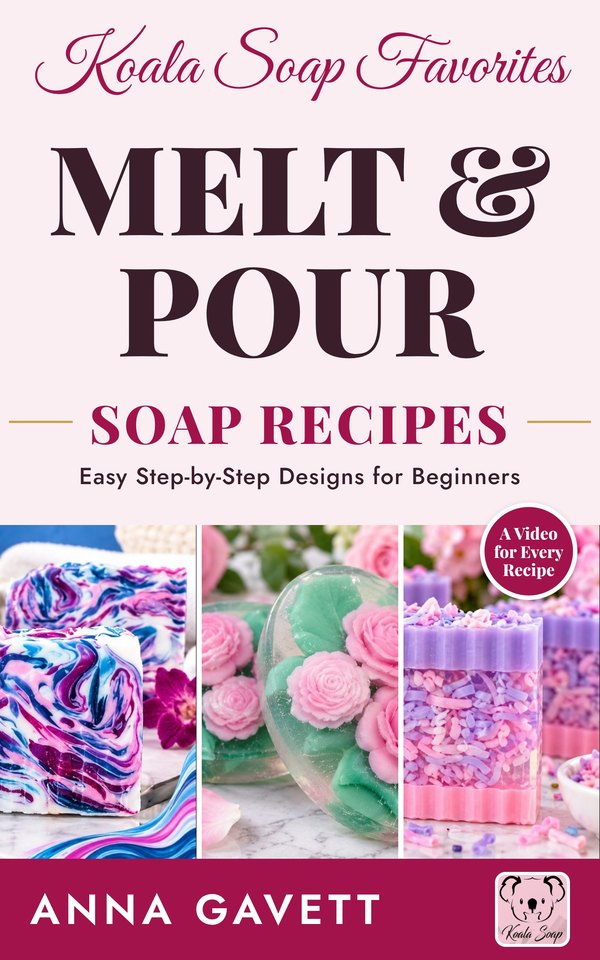
Love making soap? Get my book!
Koala Soap Favorites has 31 of my most-loved melt and pour designs with step-by-step photos, exact amounts and a video for every recipe. It makes a sweet gift for a crafty friend, too.
See it on AmazonLook inside the book →